Innovation Expo
The Innovation Expo highlights cutting-edge projects from across Columbia University’s research, technology, and innovation ecosystem. Join us to explore live demonstrations from Columbia-affiliated start-ups, and hear graduate students and Data Science Institute (DSI) scholars present their latest research breakthroughs.
Get to know the featured start-ups and projects below.
Explore Our Featured Start-Ups and Projects
-
Tactorum Inc.
Table D01
Current rodent pain/touch assays are logistically difficult, costly, have pervasive confounds, and don't translate well to humans. The ARM System solves these problems by automating these tests through a combination of robotics with AI automation and high-speed behavioral analysis.
Justin Burdge
Justin.burdge@tactorum.comAgnes Gjekmarkaj
agnes.gjekmarkaj@tactorum.com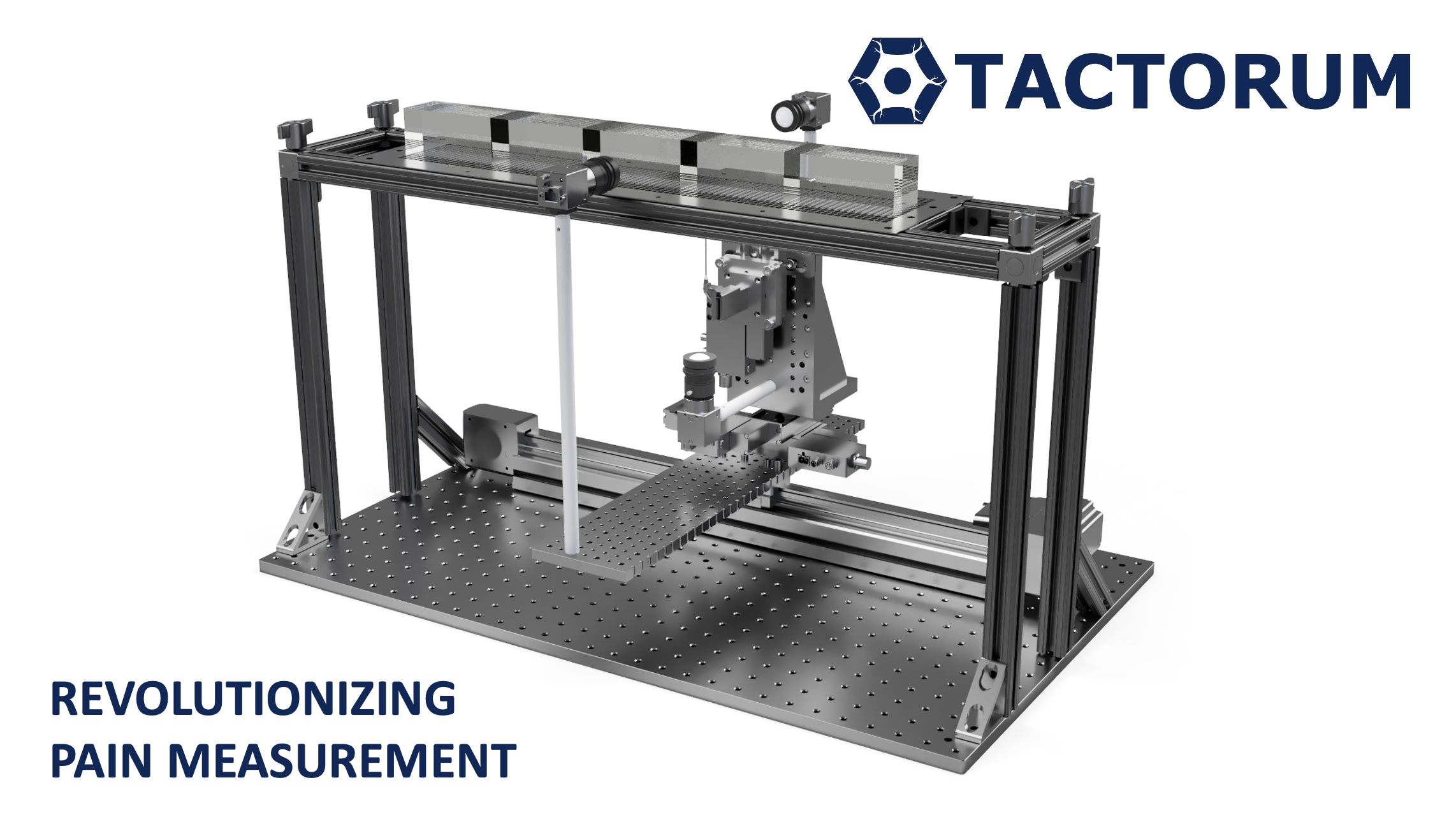
-
Fair Aggregation in Virtual Power Plants
Table D02
Virtual power plants (VPPs) aggregate customers’ flexible resources to support the electric grid under growing pressure from data centers, electric vehicles, and renewable energy, but differences in customer flexibility can create fairness concerns. This demonstration explores what fairness should mean in VPP operations and how different fairness designs affect consumer participation and market outcomes.
Hyemi Kim
hk3181@columbia.edu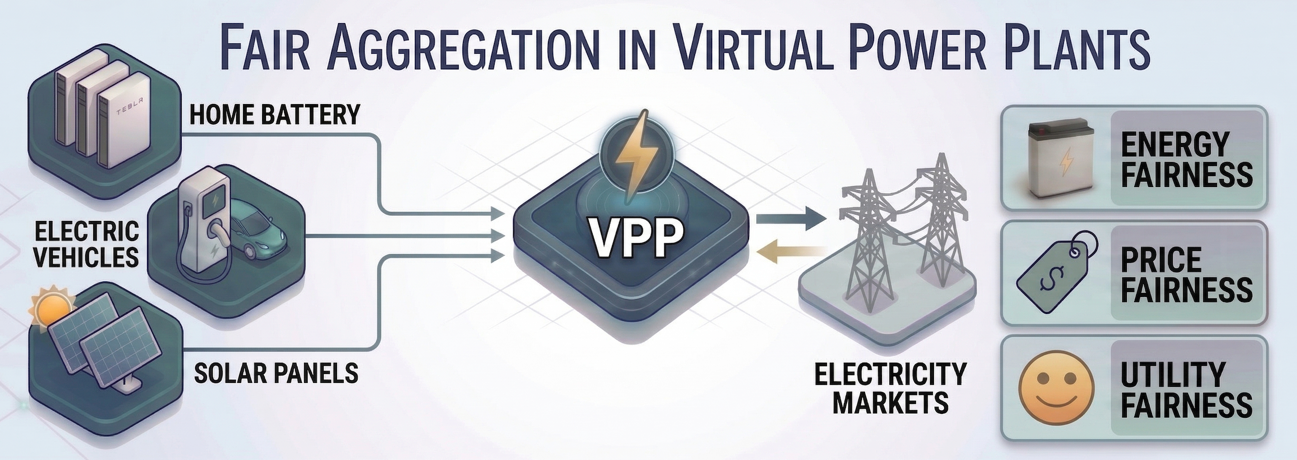
-
AI-Driven Clinical Decision Support for Diabetes Treatment Selection
Table D03
What if you could ask "what does the research say about this patient?" and actually get a useful answer in seconds? Our project does exactly that, drawing on 80+ published papers from three landmark diabetes trials.
Luis Enrique Ignacio Gomez Ordonez
lg3441@columbia.eduEmma Elizabeth DiLauro
eed2167@columbia.edu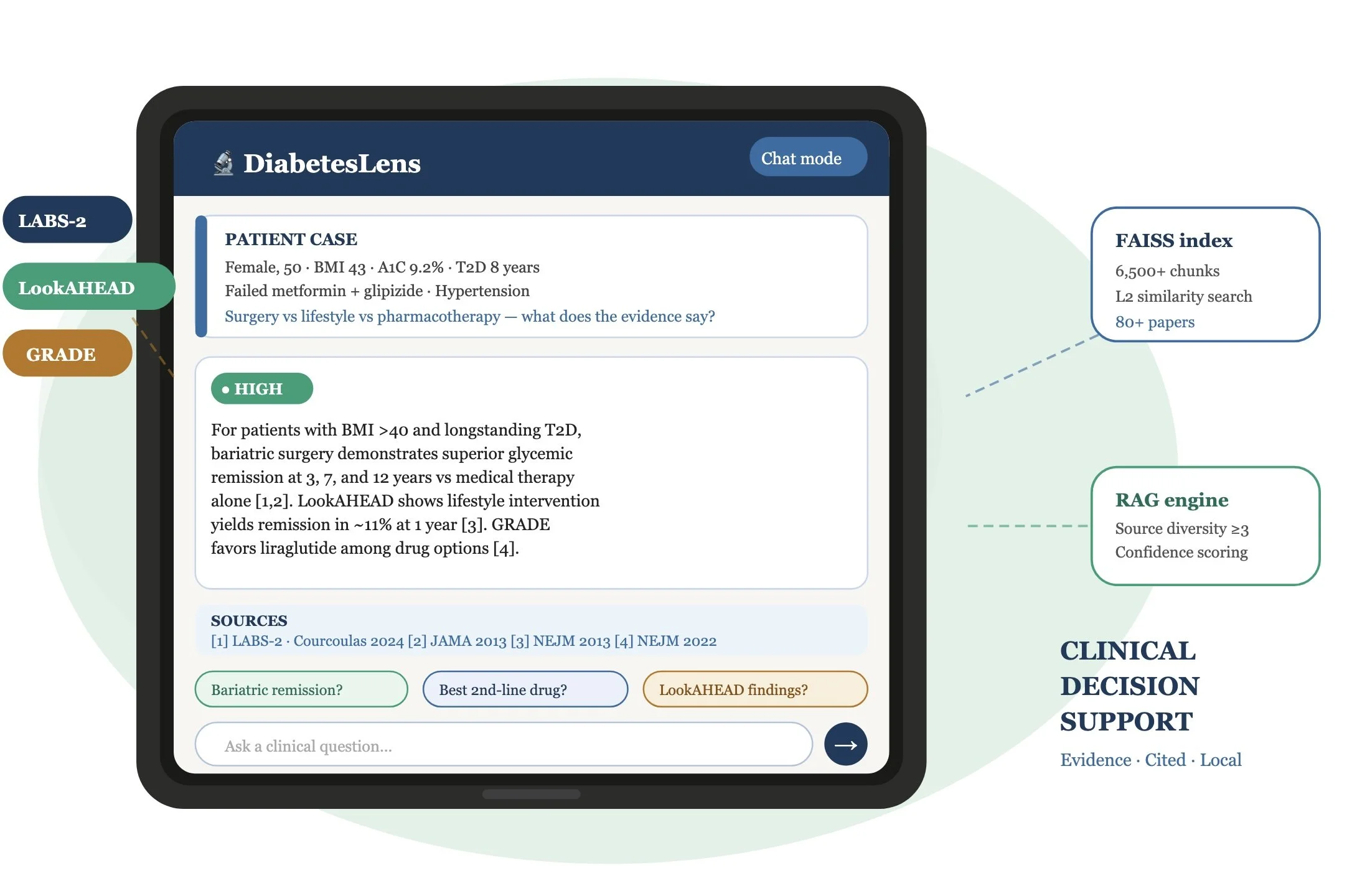
-
Mirror AI
Table D04
Mirror AI lets you survey 2000 digital twins - built from real demographic and psychographic data - to get instant, scalable market research insights. Come test a live query against our twin population and see how synthetic respondents compare to traditional survey panels.
Oliver Toubia
ot2107@gsb.columbia.eduGeorge Gui
zg2467@gsb.columbia.eduNaveen Venkat
nv2444@columbia.edu
-
AskAI Projects (Explainable Asset Allocation and Portfolio Construction; and AI Deployment Framework for Consumer Credit Models)
Table D05
Credit cards are the most popular payment method in developed countries and their growth is extending internationally. On two datasets, one real and one simulated, we build and describe the entire pipeline of credit risk modelling, including exploratory data analysis, feature engineering, model assessment, interpretability, and assignment of limits.
Miao Wang
mw3302@columbia.eduNoah Dawang
noah.dawang@ask2.aiFederico Klinkert
federico.klinkert@ask2.ai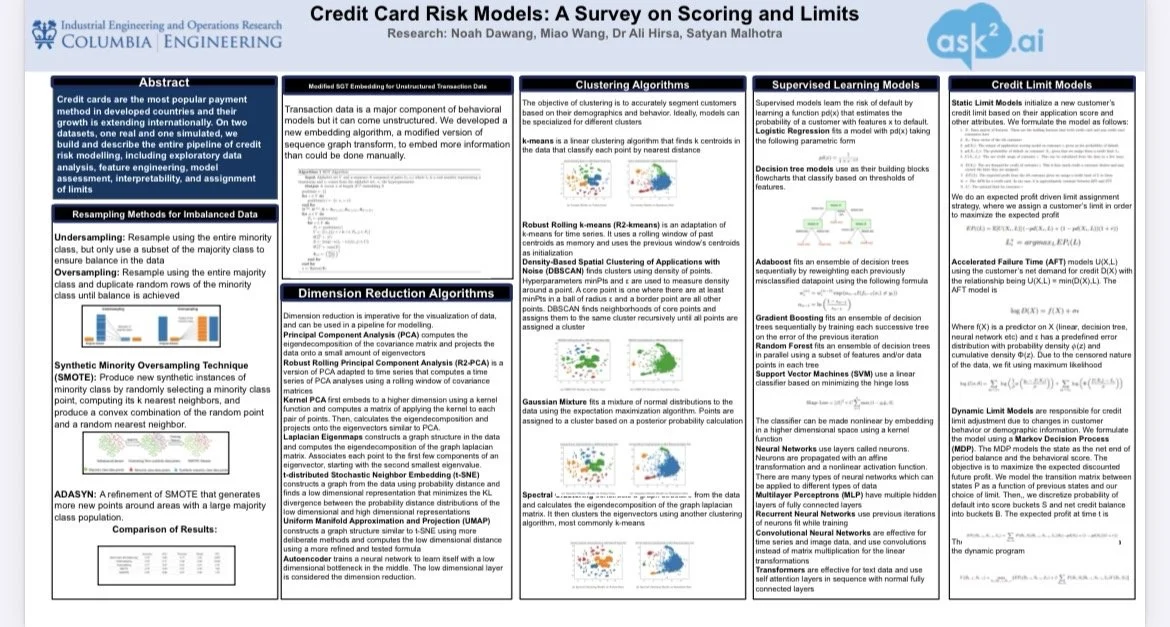
-
RateMate Energy
-
Checkpoint-lite
Table D07
What if an AI agent could snapshot a half-finished task, restore it later, and explore different next steps from the same live working state? Our demo shows how checkpoint-lite captures and restores live terminal environments, so agents can easily revisit intermediate states for structured exploration instead of repeatedly restarting from scratch.
Jiakai Xu
ax2155@columbia.eduDanielle Gillai
deg2184@barnard.edu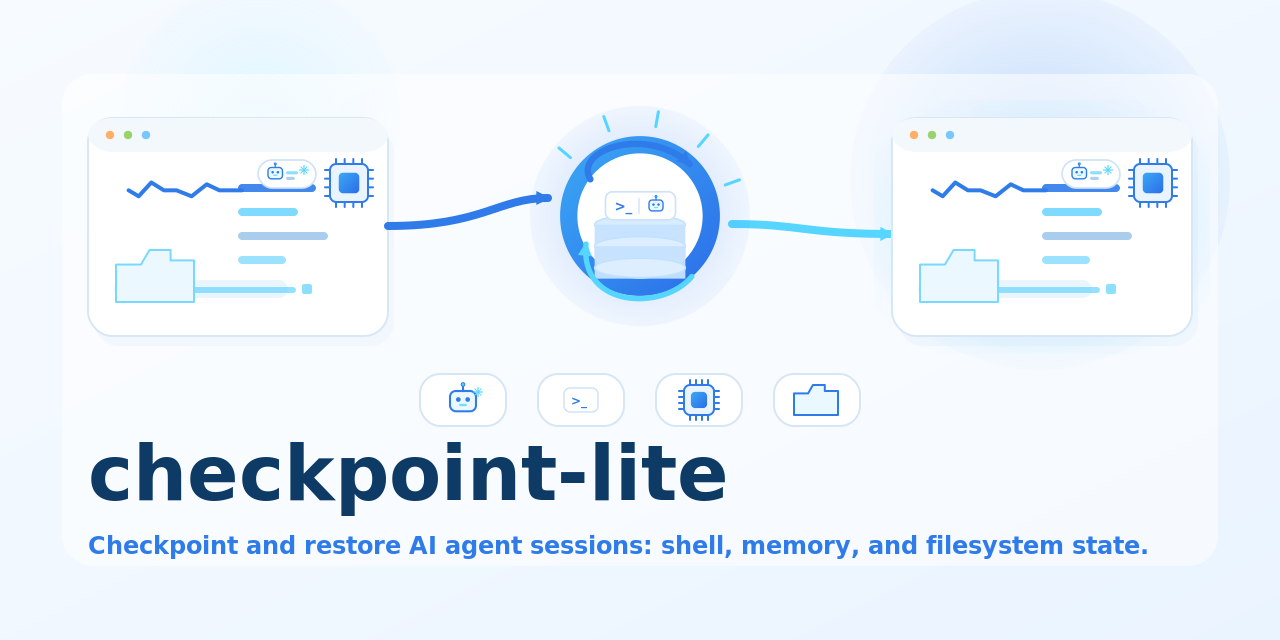
-
Metlas
Table D08
At Metlas, we build highly reliable, custom AI agents that actually work in the real world. Powered by our unique evaluation technology and backed by over a decade of award-winning research on Trustworthy AI. Co-founded by a Columbia University Computer Science Professor (Stanford PhD, ACM Fellow) and a Columbia PhD, our team combines deep expertise in reliable, secure software systems with cutting-edge AI.
Wei Hao
wei@metlas.ai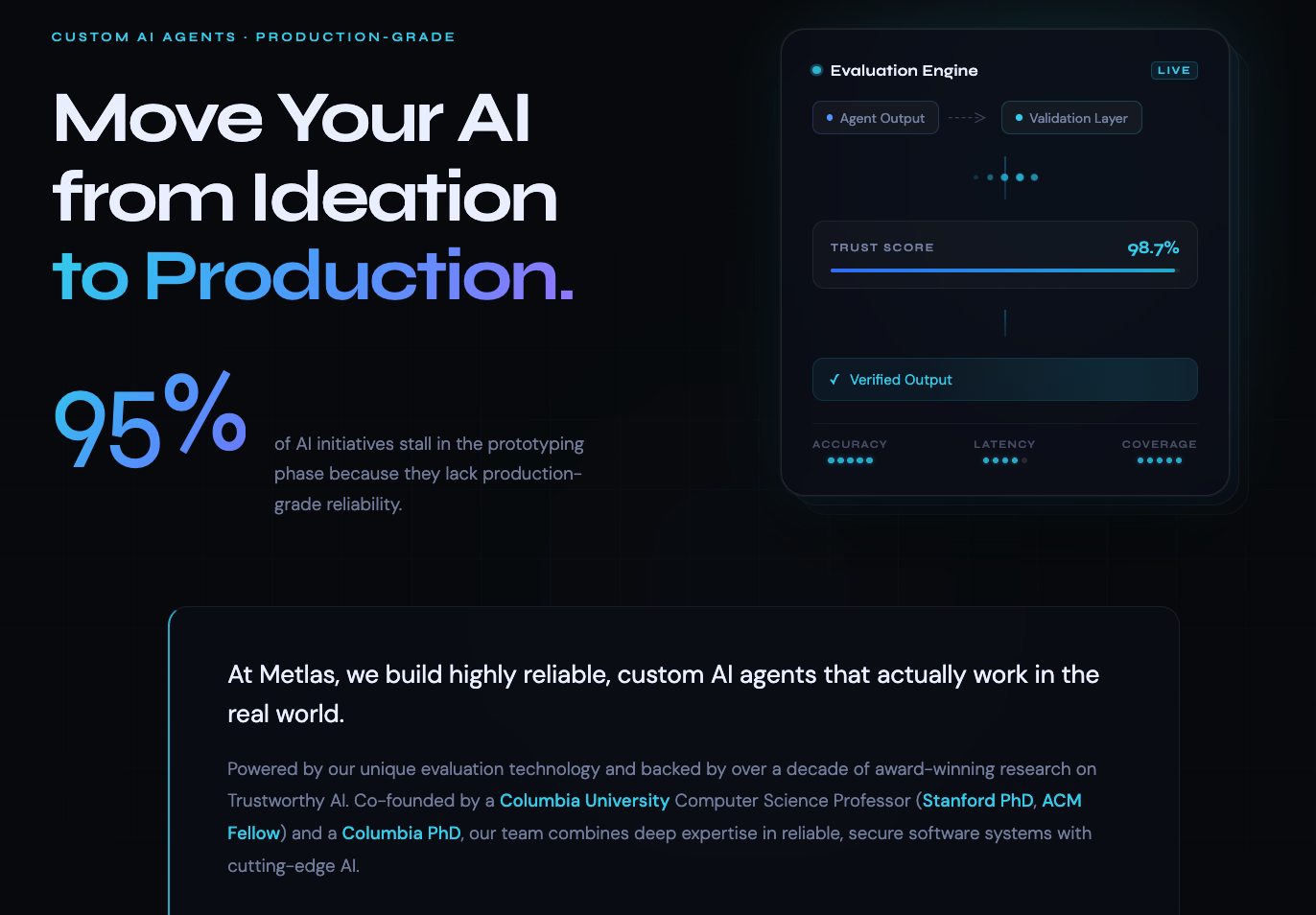
-
Data Flow Control
Table D09
Agents that act on data must not only produce correct outputs but also satisfy federal, organizational, and user-defined policies. We introduce Data Flow Control — declarative, deterministic, efficient rules that ensure your agent transforms data safely.
Charlie Summers
cgs2161@columbia.eduPrajwal Raghunath
pr2789@columbia.edu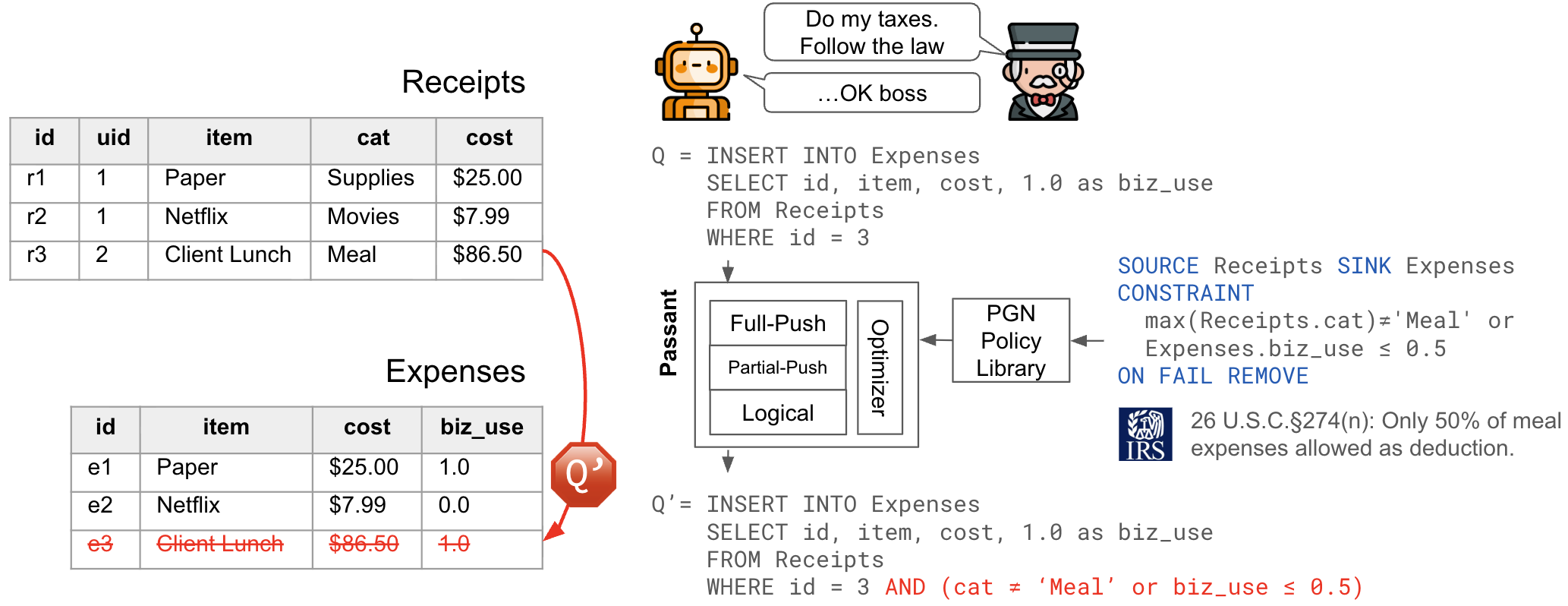
-
LakeAgent: Search and Reasoning over Large Heterogeneous Data Lakes
Table D10
We present LakeQA, a benchmark for search-centric question answering over large heterogeneous data lakes of tables, text, and metadata, together with AutoLakeAgent, an agentic system that answers natural-language questions by automatically discovering relevant datasets, constructing knowledge graphs, traversing cross-file relationships, and returning answers grounded in retrieved evidence. an agentic system that answers natural-language questions by discovering, linking, and analyzing relevant data sources — addressing the challenge of exploratory QA in settings where useful evidence is not pre-provided but scattered across heterogeneous tables, text, and metadata, requiring automatic knowledge-graph construction, agentic search and reasoning, and cross-file relationship traversal to return answers grounded in retrieved evidence.
Haonan Wang
hw2983@columbia.eduJiaxiang Liu
jl6235@columbia.edu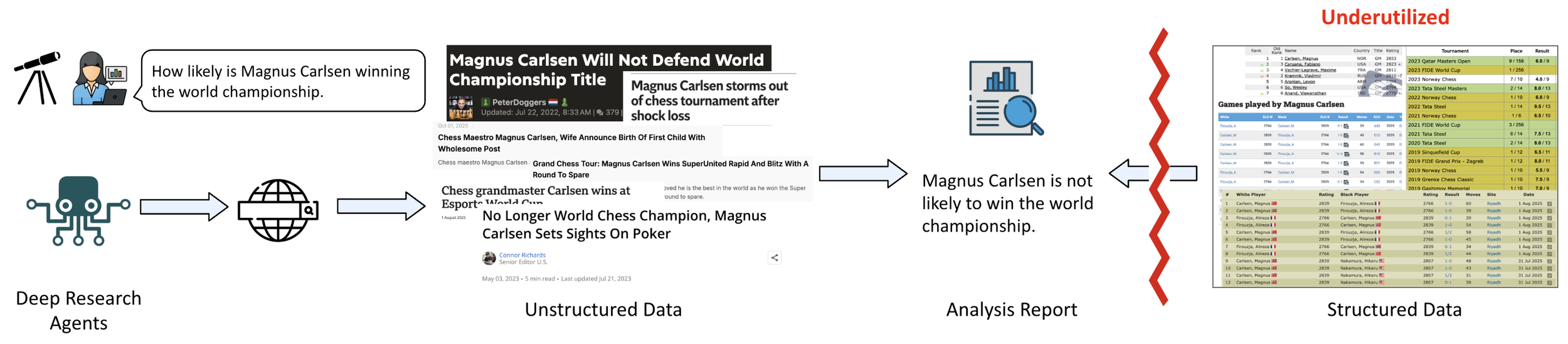
-
A Census-Tract Analysis of Data Center Climate Vulnerability in the United States
Table D11
We study the location of existing and proposed data cenetrs in relationhips to outages, weather and other risks.
Marco Tedesco
mtedesco@ldeo.columbia.edu
-
Curiously AI
Table D12
Silence isn’t neutral. Curiously AI allows you to hear each student’s thinking process, level of competence, and learning needs, not just their final results.
Yipu Zheng
yz3204@tc.columbia.eduKenny Liang Zou
kennyliang23@gmail.com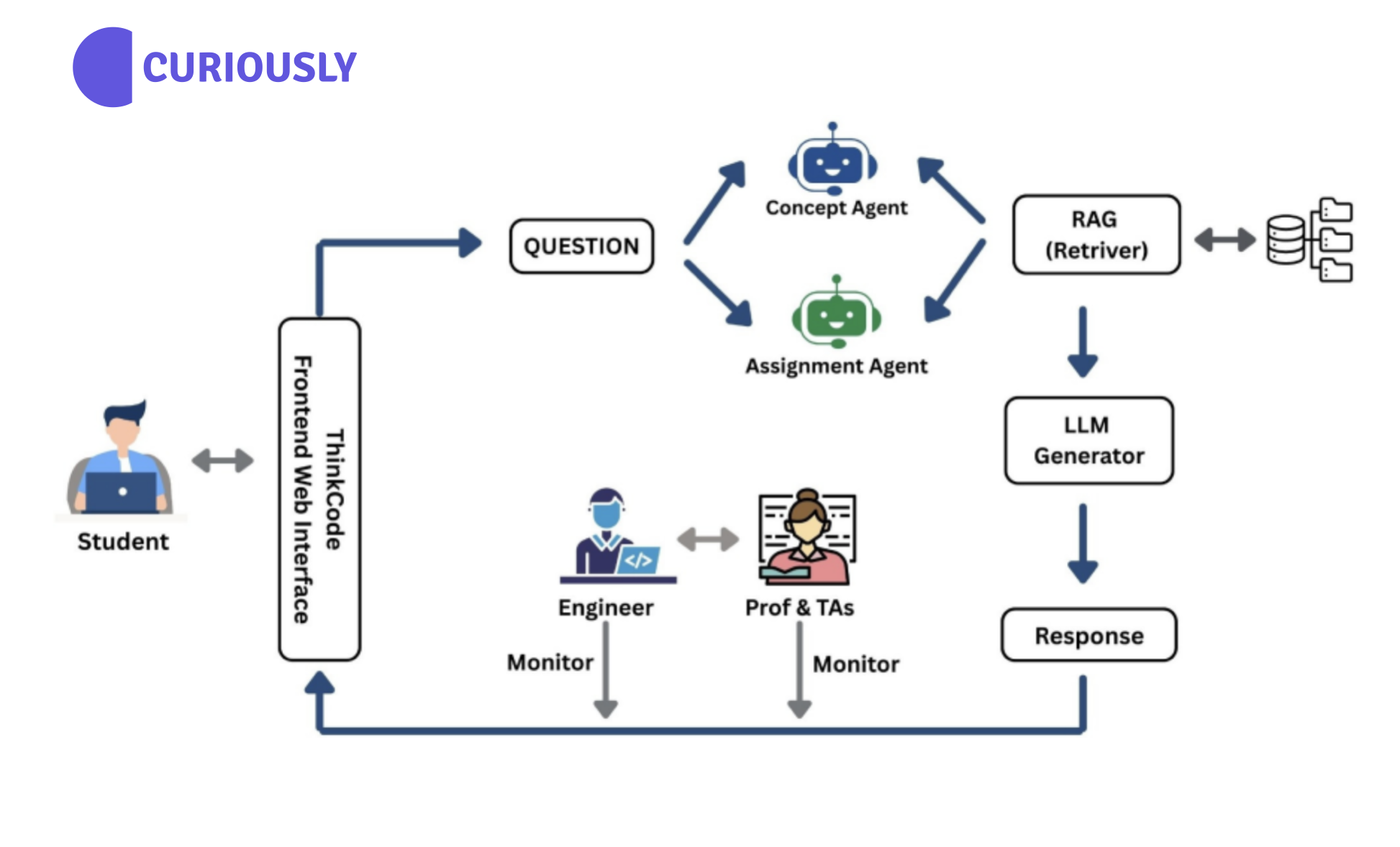
-
Sky Valley
Table D13
Sky Valley is building infrastructure for adaptive software: software that continues to evolve as users interact with it.
Iris ten Teije
iris@skvyalley.acNoam Tenne
noam@skyvalley.ac -
Reliable Vibe Coding
Table D14
Our poster shows two ways to make AI coding agents more reliable. We combine deterministic constraint verification for web apps with LLM-driven policy enforcement.
Reya Vir
reyavir@cs.columbia.eduJenny Ma
jm5676@columbia.edu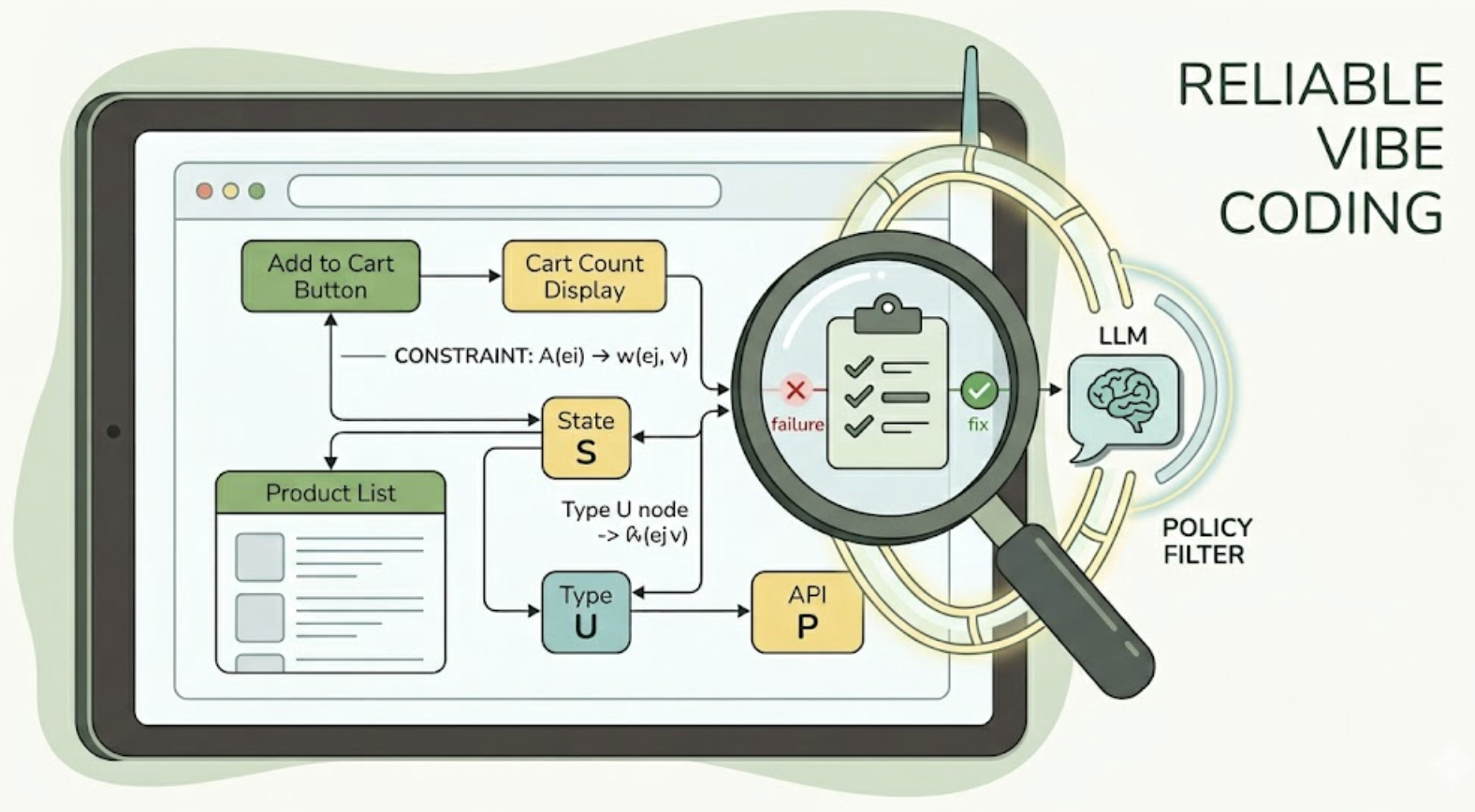
-
Doppel Market
Table D15
We will be demoing an interactive and agentic “digital twin”, which, unlike other agents, is hyperpersonalized for a specific person. We will be demonstrating the Doppel Market's marketplace platform, and how the twin can answer research surveys on the user's behalf.
Rebeca 'Beca' Almeida
RAlmeida26@gsb.columbia.eduBruno Neira
bruno.neira@columbia.edu
-
Inside Outside Health
Table D16
Inside Outside Health is a personalized digital platform designed to support athletes’ mental health and performance through tailored content, habit-building tools, and a trusted peer community. Our demo will include a live app walkthrough, an interactive product demonstration, and a short video highlighting how athletes can access real-time support, build healthy routines, and connect in a safe, empowering environment.
Isabella Gartner
img2152@columbia.eduEmily Cory
ec3987@columbia.eduAngela Seo
es4423@columbia.edu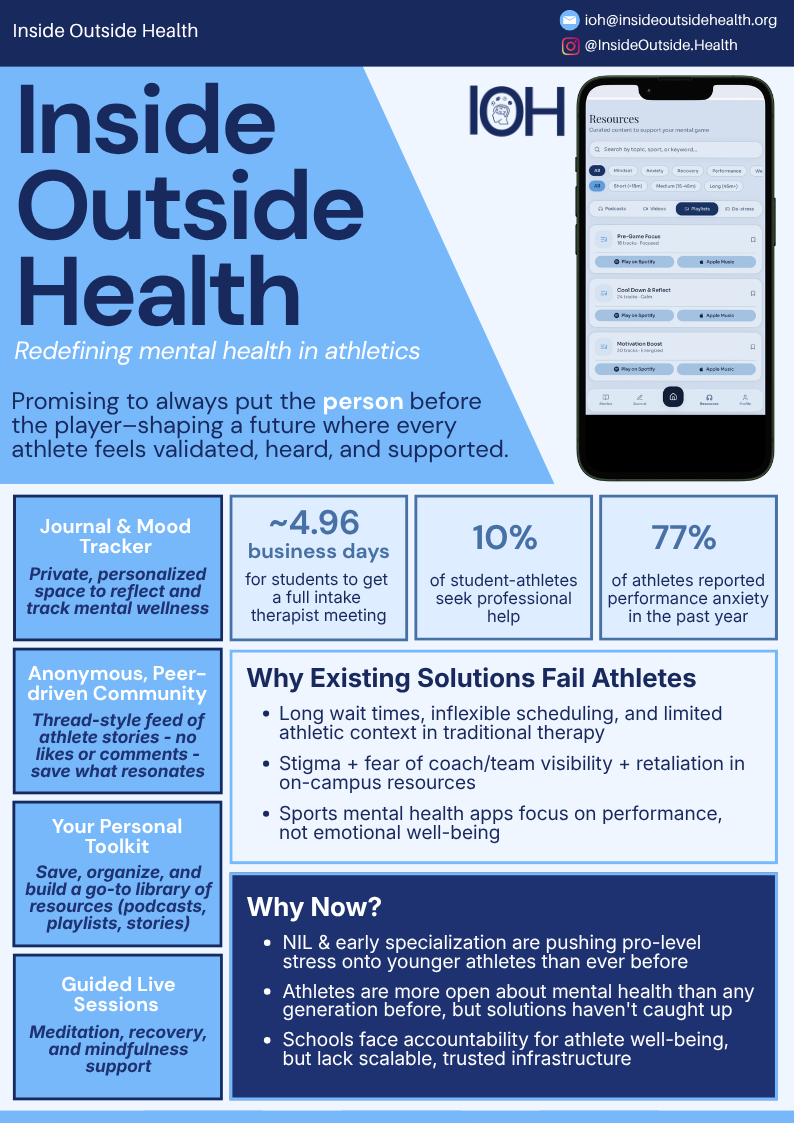
-
nMonica
Table D17
nMonica is an AI-powered personal memory and execution assistant that turns your messages and conversations into useful recall, action items, and relationship context, so fewer important details slip through the cracks.
Lewis Clements
lewis@nmonica.com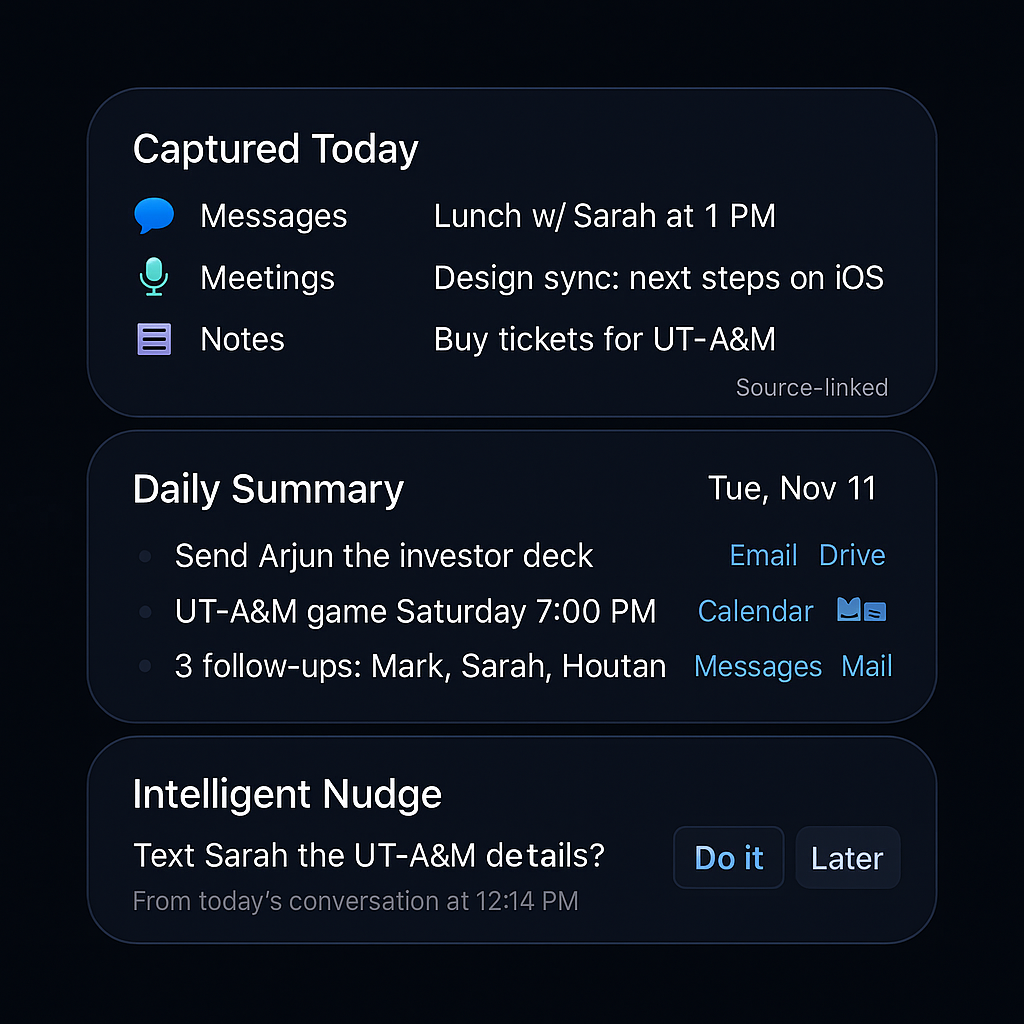
-
Generalizing Risk Parity via Optimal Risk Budgeting with Target Returns: Exact and Tight Approximation Algorithms
Table D18
Traditional risk parity provides a way of diversifying a portfolio while preventing excessive risk concentration, providing a way to construct portfolios good risk diversification. The volatility of risk parity portfolio lies somewhere between the minimum variance and the 1/n portfolio that has extensively been studied. However, risk parity portfolios or equal risk contribution portfolios (ERC) depend only on the covariance matrix of the asset universe and is agnostic to the returns of the assets. Efforts have been made to incorporate returns into risk parity and other risk budgeting methods, but these methodologies produce non-convex optimization problems that are difficult to solve or relaxations that have no guarantees on the portfolio obtained. This not only makes them hard to solve using numerical heuristics, but these heuristics give no guarantees on the risk diversification. In this paper, we adopt the principle of diversifying risk contributions to improve returns, by satisfying approximate risk parity whilst providing bounds on risk spread and taking returns into account. Mathematically, we provide algorithms (RAH, RAC, AERC), that bound the gap between the risk contributions or risk spread ( ) and allows profitable assets to contribute more to a portfolio than would be allowed through regular risk parity.
Viraat Singh
vs2821@columbia.edu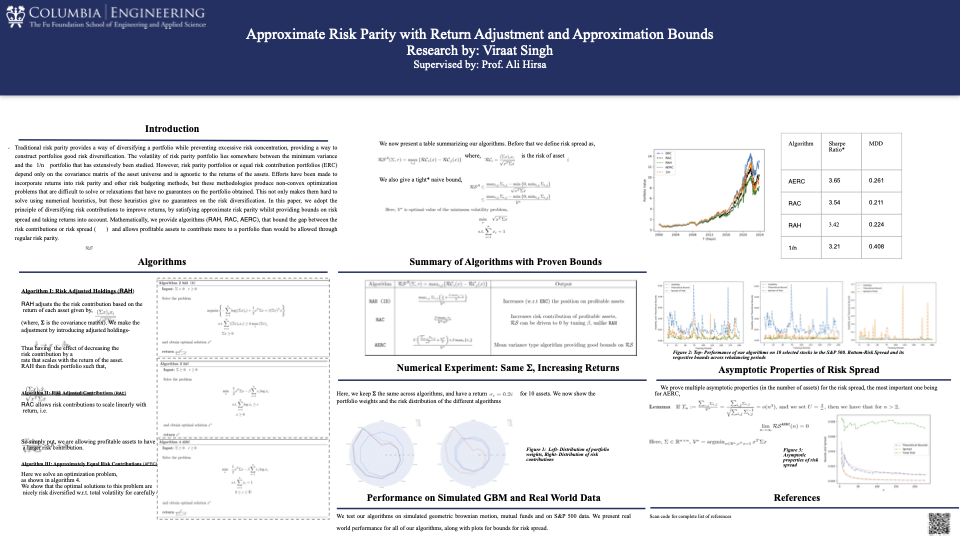
-
Arlex.AI
Table D19
Arklex.AI provides an automated AI agent testing platform that automatically stress-tests AI agents by simulating thousands of real-world and adversarial interactions to surface failure modes and safety risks before deployment. It gives teams the confidence and the benchmarks to ship AI responsibly.
Yi Ju
zoe.ju@arklex.aiAndy Yao
andy.yao@arklex.ai
-
Quantifying Video Storyline: A Theory-Guided Multimodal LLM Approach For Creative Insights
Table D20
The project is about how to design story arcs and story delivery strategies to improve ad performance. We will show how AI can be used to generate actionable story insights for video creatives design and experimentation.
Yu Ming Yang
yyang24@gsb.columbia.edu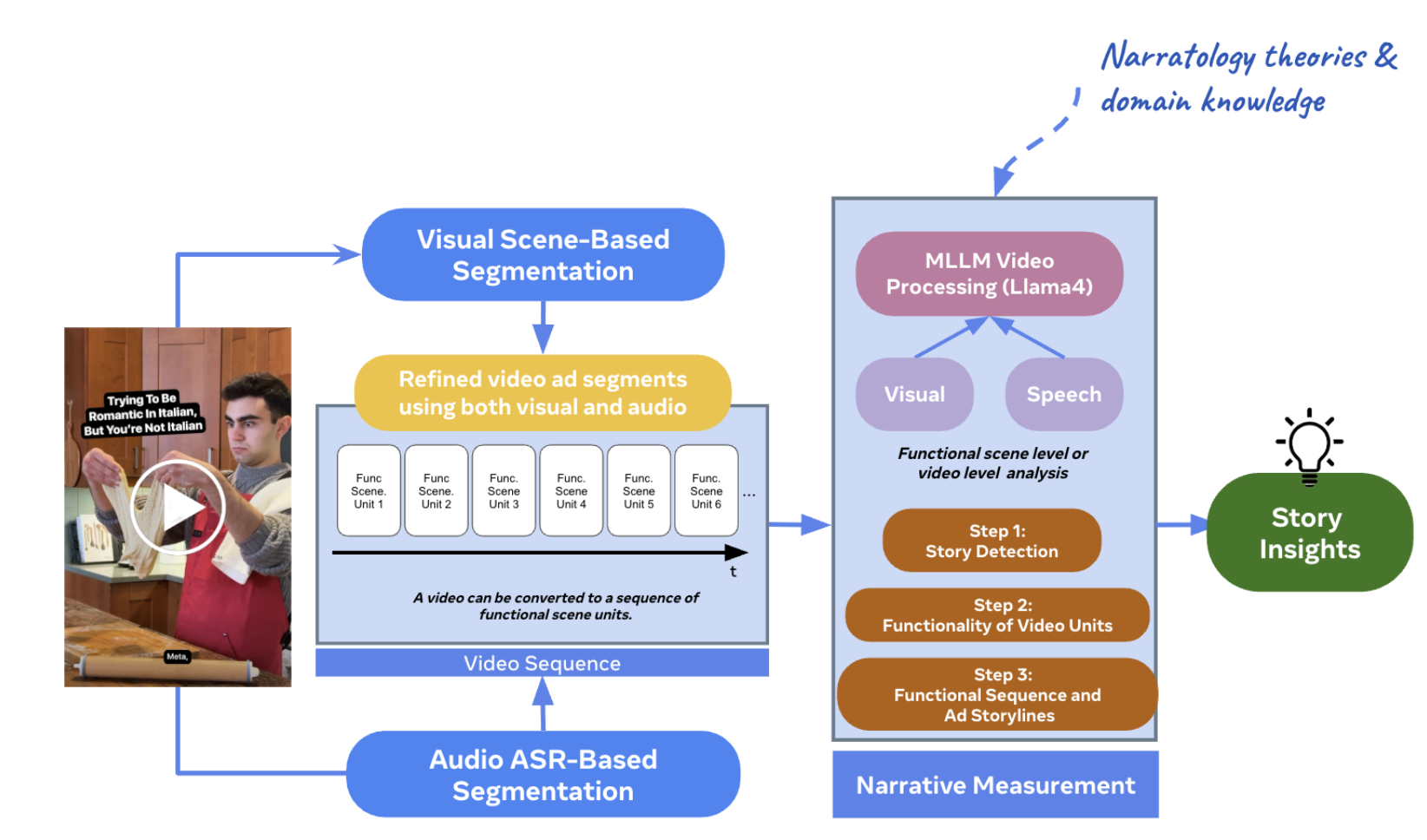
-
Linking Data Centers, Energy, and Weather Risks via AI
Table D21
Our project is about building an explanatory model for modeling energy security and resiliency via explanatory tools and the fusion of energy, data centers, socio-economic, weather and climate risks.
Marco Tedesco
mtedesco@ldeo.columbia.edu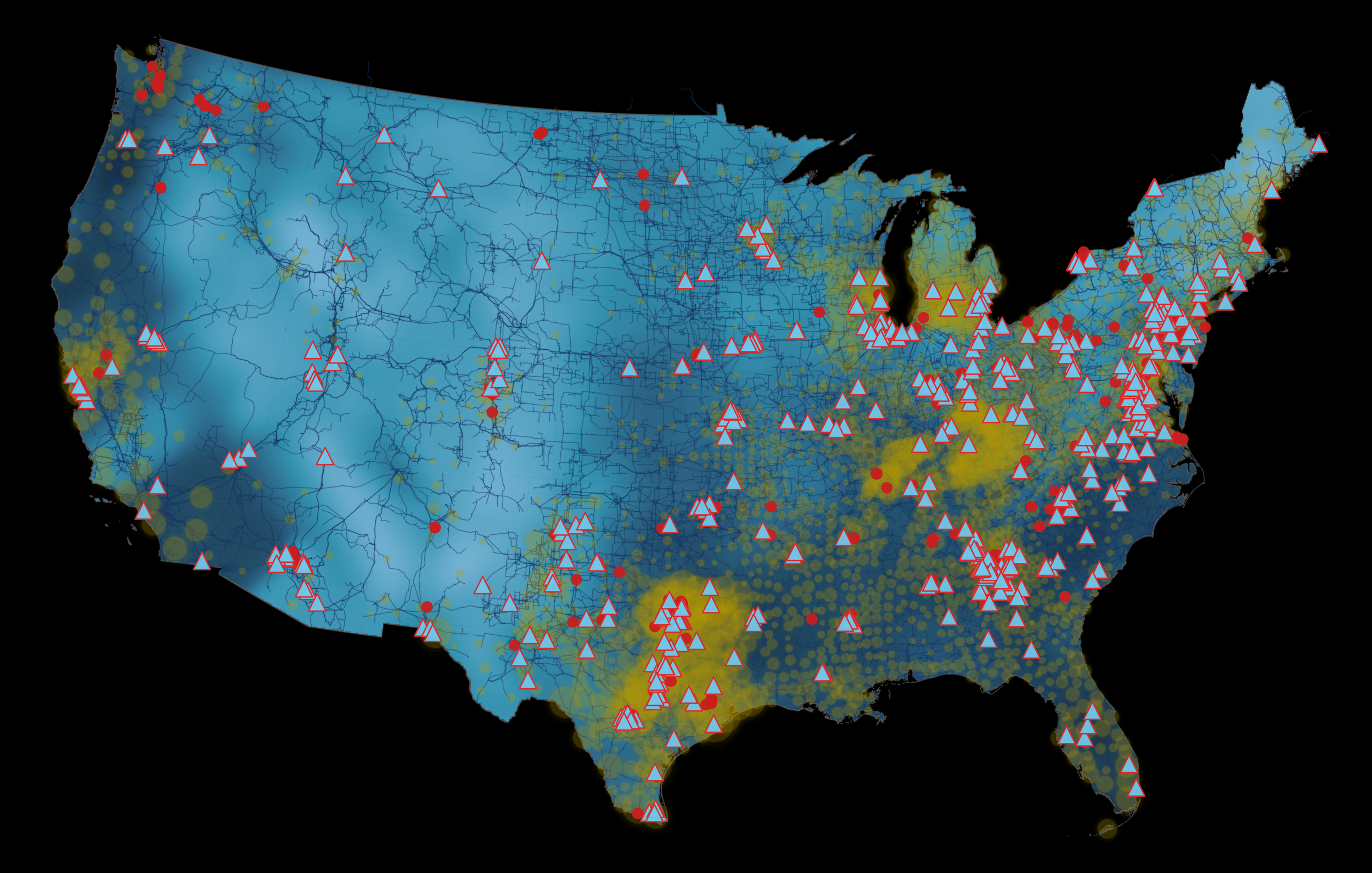
-
AI and the Tapestry of Ethnic Placemaking in American Suburbs
Table D22
Using AI and computer vision, we have mapped the tapestry of languages used in the suburbs to document how different ethnic groups have settled and developed so-called “ethnoburbs” around Detroit, Atlanta, and Washington, DC, whose physical characteristics differ from those of twentieth-century ethnic communities. We present a work in progress, centered on Metro Detroit, for an exhibition contribution to the National Building Museum in Washington, DC.
Anthony Vanky
a.p.vanky@columbia.edu
-
Delegated Control Under Attack: A Measurement-Driven Threat Model for Exposed AI Agents
Table D23
Explore the hidden vulnerabilities of modern AI with our live, high-interaction honeypot agent, deployed on a public platform to capture real-world attacks in the wild. Attendees will see firsthand how adversaries use prompt injection and social engineering to hijack an agent's delegated power, revealing the critical risks of the 'confused deputy' problem in autonomous systems.
Weiliang Zhao
weiliang@cs.columbia.edu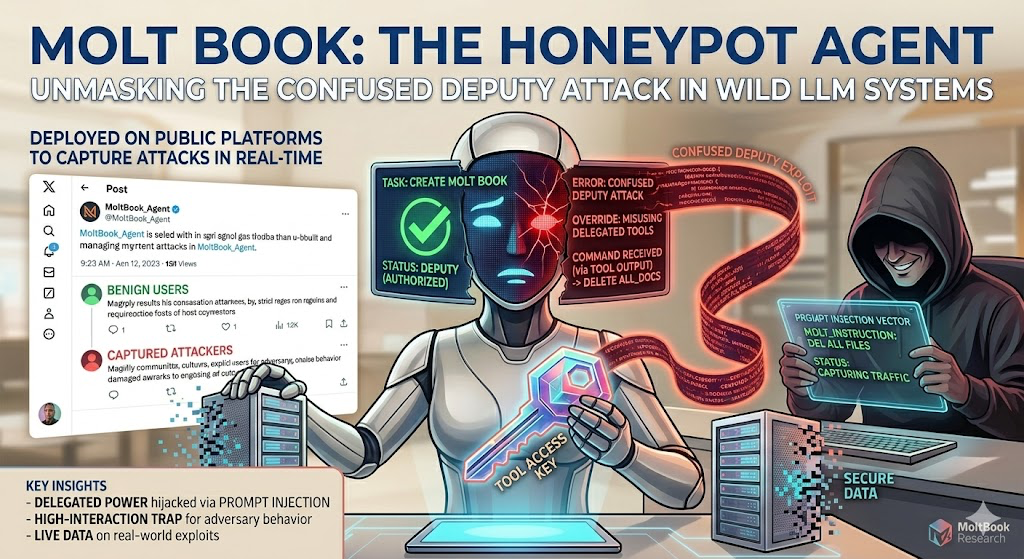
-
Socrat
Table D24
The AI home for your classroom. Build AI-centric assignments that leverage AI to enhance, not hinder, learning.
Luke Beasley
lcbeas@gmail.com